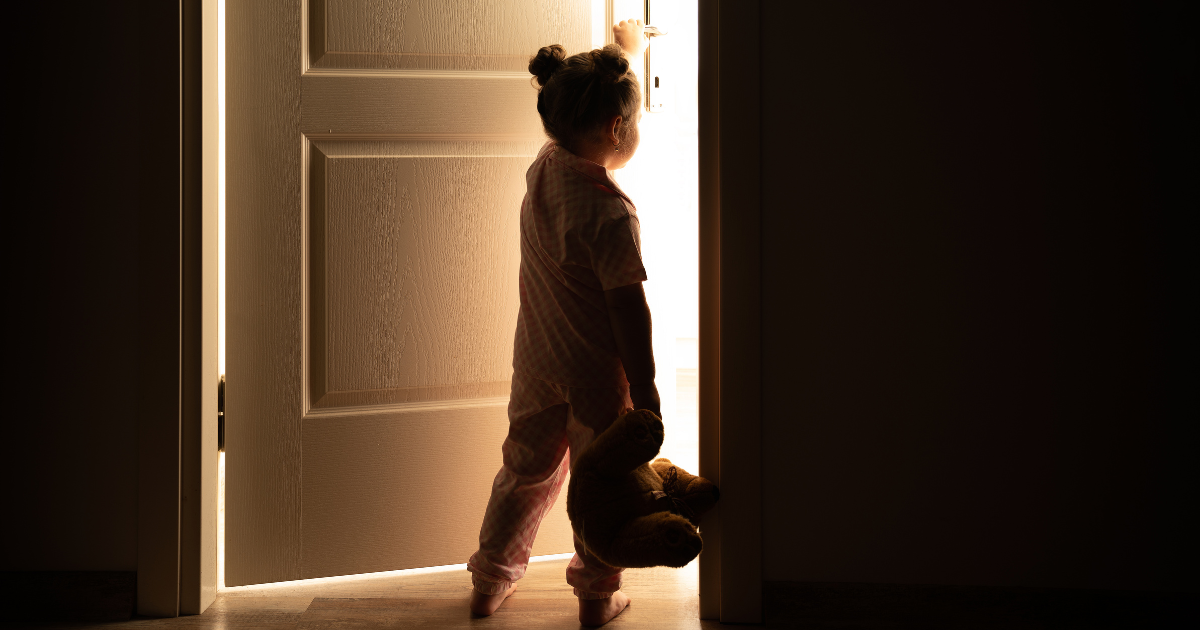
Your toddler is tucked into their own bed, the house is finally quiet, and then there they are again, standing at your bedside. If your toddler keeps coming into your room at night, it can leave you exhausted, frustrated, and wondering what you’re doing wrong. The good news is that you’re not doing anything wrong, and this is one of the most common sleep struggles I hear about. Once you understand why it’s happening, it gets a lot easier to know what to do next.
Why Your Toddler Keeps Coming Into Your Room at Night
Nighttime visits usually have more than one cause. These are the ones I see most often:
They can get out of bed now. Once a child moves from a crib to a bed, or simply figures out how to climb out of their crib, they have a whole new kind of freedom. Walking down the hall to find you may feel like the obvious answer to them.
They’re looking for connection. Nighttime can feel big and lonely, and some toddlers who are experiencing developmental separation anxiety wake up, realize you aren’t there, and head straight for you. Bedtime is often the biggest separation of your child’s day, so it makes sense that nighttime is when those feelings show up.
They need something to fall back asleep. Everyone wakes briefly between sleep cycles at night. If your child fell asleep with you nearby, you in their bed, or them in your arms, they may wake up looking for exactly that. This is called a sleep association, and it’s very common.
Something is bothering them. A bad dream, a fear of the dark, or a big change like a new sibling, a new school, or a move can make nighttime feel scarier than usual.
Their sleep is off. A bedtime that’s too late or too little sleep overall can leave a child overtired, which can lead to more night wakings and a harder time settling back down.
It has become a habit. If nighttime visits have been happening for a while, your room may now feel like the safest, coziest place to be, so it makes sense that your child keeps heading there. Habits like this can build over time, and they’re very common.
What the Timing Can Tell You
What time of night your child shows up can give you clues about what’s going on:
Soon after bedtime. Your child may not feel quite ready to be on their own yet, or may still need help falling asleep. The bedtime routine and how your child falls asleep are good places to start.
At the same time every night. This can point to a sleep association, since many children wake between sleep cycles around the same time each night. It can also be a sign that bedtime or naps are a little off.
Between 4:00 and 6:00 AM. This is more of an early morning waking than a middle-of-the-night one, and the fixes can look different. Sleep is lightest in the early morning hours, so it can be easier for a child to wake up and head for your room. My free Early Morning Wakings guide has tips to help your child sleep a little later.
Suddenly, after weeks, months, or years of sleeping through the night in their own bed. A change like a new bed, a new sibling, or starting school may be the trigger. If your child used to sleep well, extra connection during the day and a steady response at night can often help.
Is It Okay to Let Them Stay?
If it works for your family, letting your toddler or big kid stay with you isn’t wrong, and there’s no single solution that fits every family’s needs and desires. If everyone is sleeping well and you and your child are happy sleeping in the same bed, you may not need to change a thing. But if it’s leaving anyone tired or frustrated, it may be time to make a change, and moving from co-sleeping to independent sleep can be done gently, at a pace that works for your child.
A quick note: if you have a baby under 12 months, please follow the AAP’s safe sleep guidelines. For questions about co-sleeping with your baby, talk with your pediatrician, and for general baby sleep questions, feel free to reach out to me.
What to Do When They Show Up at Night
How you respond when your child shows up can make a big difference. In the middle of the night, the goal is to keep things calm, quiet, and boring. A few things that can help:
Keep the lights off and your voice low. Bright lights and long conversations can wake a sleepy child up more than you’d like.
Keep it short and sweet. A hug and a simple, reassuring phrase like “You’re safe. It’s still sleep time. I’ll walk you back to bed” is plenty. Toddlers and big kids can be great at starting long conversations in the middle of the night, often because they want more time with you or are using it as a stalling technique, so using the same short words each time can help.
Walk them back to their room. Settle them in with as little conversation as possible, and try to respond the same way each time. Children often feel more secure when they know what to expect.
Give them something comforting to see. Many children feel more settled when they wake up and find proof that you were close by throughout the night.
Responding in the same calm way most nights matters more than getting every single night perfect.
What if They Protest When You Walk Them Back?
Some protest is normal, especially at first. Your child is used to how things have been going, and a change can feel big to them. It doesn’t mean you’re doing something wrong, and if there are a few tears, a prepared, responsive approach can help keep the change gentle. Staying calm, using the same simple words, and responding the same way each time can help your child learn what to expect.
What Helps Before They Wake Up
Many nighttime visits can be helped during the day and at bedtime, when everyone is rested and calm.
Add a little connection before bed. A few minutes of one-on-one time, like a cuddle, a book, or a quick chat about their day, can help your child feel full of connection before the lights go out.
Practice being apart during the day. Playful, low-pressure moments of separation, like playing in their room by themselves for a few minutes at a time, can help your child feel more comfortable being apart, which can make nighttime separation feel less big.
Check the bedtime timing. A bedtime that’s even a little too late can make sleep lighter and night wakings more likely.
Talk about it in the daytime. In a calm moment, not in the middle of the night, let your child know what will happen at night in simple, positive words. Children handle changes better when they know what’s coming.
That daytime practice and preparation for changes is a big part of why every plan I build for a toddler or big kid starts with the Ready, Set, Sleep Prep Plan™, which helps children feel ready for sleep changes and separation before anything changes at night.
When It Keeps Happening
If your child has been coming into your room for weeks or months, if it happens every night, or if you’ve tried a few things and nothing is sticking, it may help to look at the whole picture. A custom sleep plan can pull all the pieces together around your child, so everyone gets more sleep, and you’re not figuring it out alone in the middle of the night.
Ready for Easier Nights?
Grab my free guide, 3 Secrets for Getting Your Toddler to Actually Stay in Bed Tonight, to start making nights a little easier. And if you feel like you’ve tried everything, book your free 15-minute discovery call and let’s talk about what would actually help and finally make these changes stick.