Guest Post: Is Your Toddler's Mouth Breathing Ruining Their Sleep? What Every Parent Needs to Know
A good sleep plan handles so much of what disrupts toddler sleep, but every plan works best when we're looking at the whole picture. Airway health is something I ask about in every intake, is your child's mouth open at night, are they snoring, do they wake up sweaty, but it's not something a sleep plan alone can fully address. That's where an expert like Bethany Lovern comes in.
Bethany is a Speech-Language Pathologist who specializes in oral motor development and airway health, and I'm thrilled to have her share her expertise here.
If your toddler is a restless sleeper, a snorer, or someone who wakes up grumpy no matter how many hours they logged, you might be looking at sleep schedules and wake windows and wondering what you're doing wrong.
But what if the problem isn't the schedule at all?
Toddler mouth breathing and sleep quality are deeply connected, and it's one of the most overlooked pieces of the toddler sleep puzzle. As a Speech-Language Pathologist with a master's degree and specialized training in oral motor function and airway health, I see this connection every single day. And most parents have no idea it's on their radar to look for.
So let's talk about it together, because what you're about to read might explain a lot.
Why Mouth Breathing and Sleep Don't Mix Well
Here's something most people don't know: breathing through the nose and breathing through the mouth are not the same thing. Not even close.
When your toddler breathes through their nose, the nasal passages filter and warm the incoming air, the body produces nitric oxide (which improves oxygen absorption and supports immune function), the tongue rests in the correct position against the roof of the mouth, and the brain is able to reach deeper, more restorative stages of sleep.
When a toddler breathes through their mouth during sleep, none of that happens well. The airway is less stable, oxygen exchange is less efficient, and the brain works harder to maintain breathing. That extra effort disrupts the sleep cycle, pulling the brain out of deep sleep and into lighter stages. Your toddler may still technically be sleeping for 11 hours. But they're not getting 11 hours of good sleep.
This is why toddler mouth breathing and sleep problems so often travel together.
Signs That Mouth Breathing Is Affecting Your Toddler's Sleep
Some of these will feel obvious. Others might make you go back and look at your toddler tonight with new eyes.
They Snore or Sound Noisy When They Sleep
Light snoring in a toddler is common enough that many parents assume it's normal. It's not. Snoring is a sign that the airway is partially obstructed or that breathing is effortful. Consistent snoring in a toddler is a reason to have a conversation with your pediatrician, especially when it shows up alongside sleep disruption.
Their Mouth Is Open During Sleep
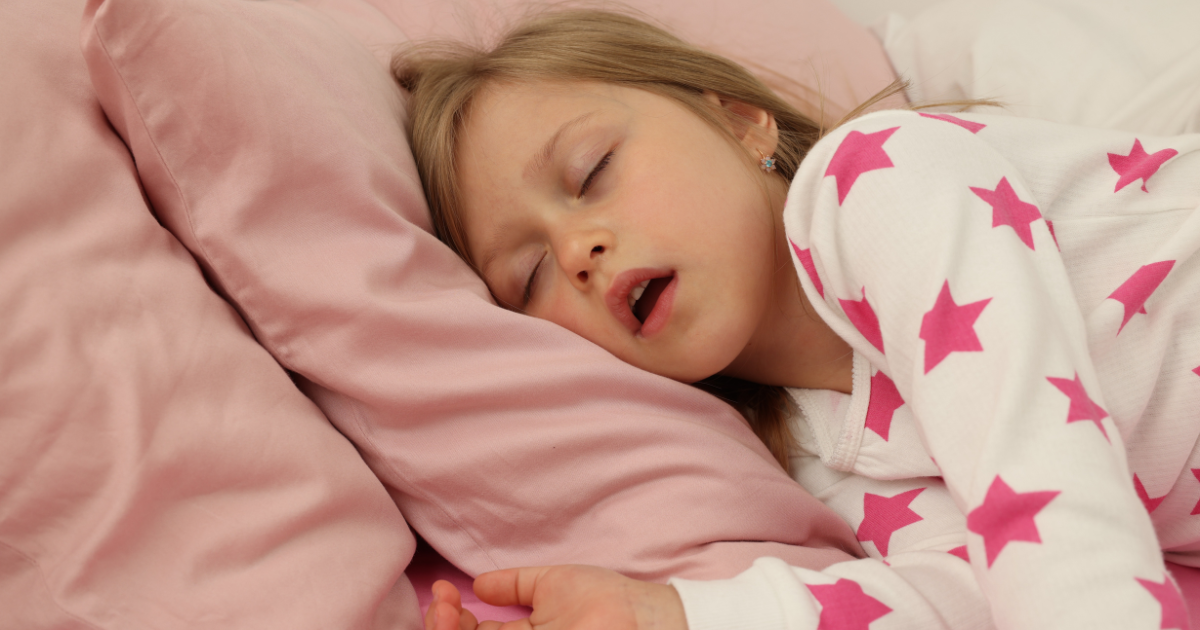
Go check on your toddler tonight after they've fallen asleep. Are their lips closed or open? A toddler who is breathing well nasally will typically have their lips gently closed. An open mouth during sleep is one of the most direct signs of mouth breathing.
They Wake Up Frequently or at the Same Time Every Night
When the body is working harder to breathe, sleep cycles are disrupted more easily. A toddler who mouth breathes during sleep may be a lighter sleeper than expected, waking more often than their age and schedule suggest they should. If your toddler is consistently waking at the same time each night and nothing else explains it, airway is worth considering.
They Wake Up Grumpy, Tired, or Hard to Settle
A well-rested toddler wakes up reasonably cheerful. A toddler who has been in light, disrupted sleep all night often wakes up emotional, clingy, or overtired even after a full night. If your toddler consistently wakes up more exhausted than they went down, the quality of their sleep may be the issue, not the quantity.
They Grind Their Teeth at Night
Teeth grinding, called bruxism, is another sign of airway-disrupted sleep in toddlers. When the body is struggling to maintain an open airway during sleep, the jaw can move forward or tighten in an unconscious effort to keep the airway open. If you hear grinding during the night, that's worth noting.
They Breathe Through Their Mouth During the Day Too
If your toddler's mouth is consistently open at rest during the day, during play, during quiet time, that's a sign that mouth breathing has become their default. Toddlers should be nasal breathers during calm, relaxed activity. Daytime mouth breathing alongside nighttime sleep disruption is a pattern worth evaluating.
What Causes Mouth Breathing in Toddlers
Understanding the cause matters because it shapes what kind of support will actually help.
Enlarged adenoids or tonsils are the most common structural cause of mouth breathing in toddlers. The adenoids sit at the back of the nasal passage, and when they're enlarged, they can significantly block the nasal airway. A toddler whose adenoids or tonsils are enlarged may not be able to breathe comfortably through their nose even if they want to. Pediatricians can evaluate this.
Chronic nasal congestion from allergies, sensitivities, or environmental triggers can also drive mouth breathing. If your toddler always seems a little stuffy, if they've been stuffy so long you've started to think it's just how they are, that's worth investigating further. Chronic congestion can teach the body that mouth breathing is the path of least resistance, even when the nose is clear enough to breathe through.
Tongue-tie is a cause that often surprises parents. When the tissue under the tongue is restricted, the tongue can't lift and rest properly against the roof of the mouth. A low-resting tongue changes the shape of the palate over time, which can make nasal breathing harder. It can also affect lip seal and contribute to a habit of breathing through the mouth. Many toddlers with unresolved tongue-ties that weren't caught in infancy have developed compensatory breathing patterns.
Oral motor patterns and low muscle tone around the mouth and jaw can also be involved. When the muscles that support lip closure and nasal breathing are underdeveloped or have low tone, keeping the mouth closed takes more effort than it should.
The Sleep Connection: What This Means for Your Toddler's Brain
Deep sleep is when so much of the important developmental work happens for toddlers. It is when the brain consolidates learning from the day, when growth hormone is released, when emotional regulation is reinforced, and when the immune system does a significant amount of its repair work.
When mouth breathing is disrupting the sleep cycle, your toddler isn't getting enough of that restorative deep sleep. Over time, this can look like more tantrums and bigger emotional reactions, difficulty with transitions and regulation, slower vocabulary development in some children, more frequent illness, and a child who is behaviorally exhausted even though they “slept” all night.
This is not a small thing. And it is not something you are causing by choosing the wrong sleep schedule.
What You Can Do
The most important thing you can do right now is start paying attention.
Watch your toddler sleep tonight. Note whether their mouth is open or closed, whether you hear snoring or noisy breathing, and whether they seem restless or settled. Watch them during quiet daytime moments too. These observations give you something concrete to bring to a provider.
Then talk to your pediatrician. Share what you're noticing. Ask specifically about adenoids and tonsils, ask about whether a referral to an ENT or to a speech-language pathologist makes sense, and ask about airway evaluation.
A speech-language pathologist with training in myofunctional therapy can evaluate oral muscle function, tongue posture, and breathing patterns and create a plan to support nasal breathing and better airway health in your toddler. Myofunctional therapy for toddlers is gentle, play-based, and effective.
If tongue-tie was mentioned at birth and was never addressed, or was addressed but your toddler continues to have oral motor or breathing challenges, that is worth a re-evaluation.
And if you are working with a sleep consultant and progress has stalled, share what you've noticed about breathing with them too. Sleep consultants and providers like me work well together because we're looking at different pieces of the same puzzle. When the airway piece is missing, even the best sleep plan can only go so far.
When to Reach Out to a Specialist
You don't have to wait until things feel urgent.
Reach out to a speech-language pathologist who specializes in myofunctional therapy if your toddler's mouth is consistently open at rest, if snoring or noisy sleep has been present for more than a few weeks, if you notice grinding, if your toddler seems chronically overtired despite adequate sleep hours, or if your gut says something about the way they breathe just doesn't seem right.
Early support means a shorter path back to the deep, restful sleep your toddler is supposed to be getting.
One More Thing
You are not imagining this. You are not overthinking it.
When a toddler's sleep is consistently hard, consistently disrupted, consistently confusing, something is usually going on beneath the surface. Mouth breathing is one of the most common culprits that goes unrecognized and unsupported.
You don't have to keep guessing.
→ Learn more about Bethany's Mouth Breathing Reset program
→ Grab Bethany's free MYO checklist
→ Fill out the form to book a free MYO consult
Frequently Asked Questions
Can mouth breathing cause sleep problems in toddlers?
Yes. Toddler mouth breathing and sleep disruption are closely connected. Nasal breathing supports deeper, more restorative sleep by improving oxygen exchange and stabilizing the airway. When toddlers breathe through their mouths during sleep, the sleep cycle is disrupted more easily, and they often wake up more tired than they should.
How do I know if my toddler is mouth breathing at night?
Check on your toddler after they've fallen asleep. If their lips are consistently parted and you can hear air moving through the mouth, they are mouth breathing. Other signs include snoring, restless sleep, frequent waking, and waking up grumpy despite adequate sleep hours.
What causes toddlers to breathe through their mouths?
Common causes include enlarged adenoids or tonsils, chronic nasal congestion from allergies or sensitivities, tongue-tie that affects tongue posture and palate development, and low oral muscle tone. In many cases, more than one factor is involved.
Is it normal for toddlers to snore?
Light or occasional snoring is common, but consistent snoring in a toddler is not something to dismiss. It can be a sign of partial airway obstruction or disrupted breathing during sleep. If snoring is frequent, it is worth discussing with a pediatrician and potentially an ENT or speech-language pathologist.
What is myofunctional therapy and can it help my toddler's sleep?
Myofunctional therapy involves exercises that support correct tongue posture, lip seal, and nasal breathing. For toddlers, it is gentle and play-based. When mouth breathing is related to oral muscle patterns or tongue posture, myofunctional therapy can help retrain those patterns and support better nasal breathing, which in turn supports better sleep.
When should I see a speech-language pathologist about my toddler's mouth breathing?
Sooner than you think. If your toddler's mouth is consistently open at rest, if sleep is disrupted and nothing else explains it, or if snoring has been present for several weeks, an evaluation is worthwhile. A speech-language pathologist with myofunctional training can assess whether oral function is contributing and help you understand your options.
If any of this sounds familiar, Bethany is the right person to talk to. She offers in-home visits for families in Brownsburg, Avon, Plainfield, Zionsville, and the westside of Indianapolis, along with virtual support through her Mouth Breathing Reset program.
Huge thanks to Bethany for sharing her expertise here. If you want to go deeper on oral motor and airway topics, she covers more of it in her MYO blog series. Working with someone like her won't change the sleep plan we build together, but it can be the missing piece that helps the plan actually work the way it's supposed to. If you're ready for a full, customized sleep plan for your toddler, book your free 15-minute discovery call.